.svg)


27-05-2026
Team Le Monsoon
What Makes a Perfect Biryani? The Secret Has Nothing to Do With the Recipe
Some meals don't just fill your stomach. They drift through the air and find something in you, something you may not even have known was waiting. For some people, that feeling is a memory. For others, it is the first time a smell has ever made them stop mid-step and think: I need to know what that is. Either way, something in you recognises it before your mind does. That is what biryani does. And it does it without asking who you are or where you came from.
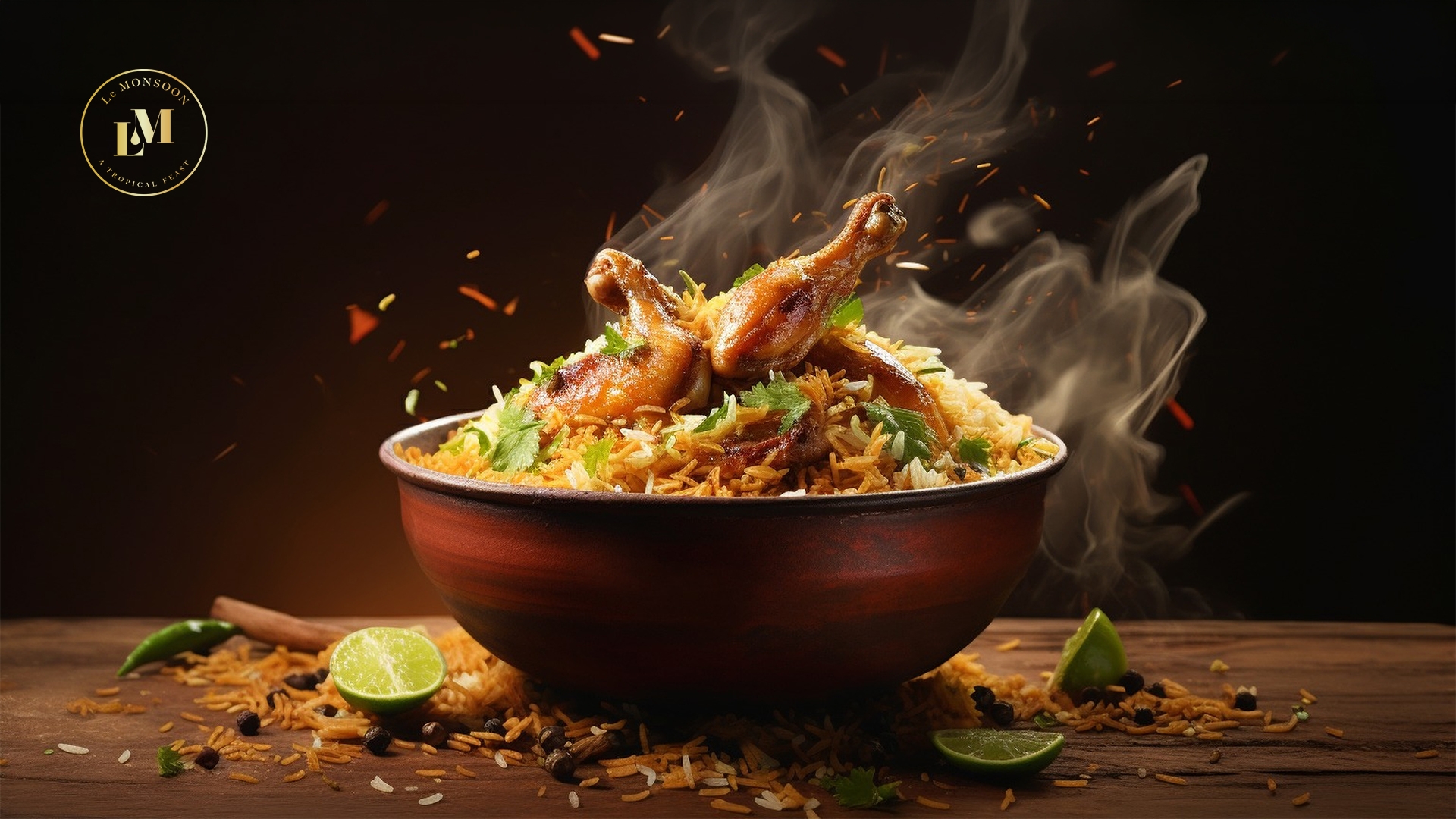
You don't always see the moment coming. The lid lifts, and the steam rises in a slow, lazy curl. Before a single word is spoken, before anyone even reaches for a plate, something inside you just settles. The air smells like ghee, whole spices, and something that has the most nostalgic name in the world, "home". It smells like being loved. It smells like Sunday. It smells like no matter what happened this week, right now, with this plate in front of you, everything is exactly as it should be.
That is biryani. Not a dish. A feeling with a lid on it.
We talk a lot about what goes into a perfect biryani, like the basmati, the marination, the dum cooking, and the saffron. And yes, all of that matters enormously. But the people who make biryani legendary are never the ones following a recipe. They're the ones who learned it by standing beside someone who never measured a thing in their life. Someone who cooked by instinct, by memory, by love, and handed down something wordless across generations. A knowledge that lives in the hands, not on the page.
The Spices Are Just the Beginning
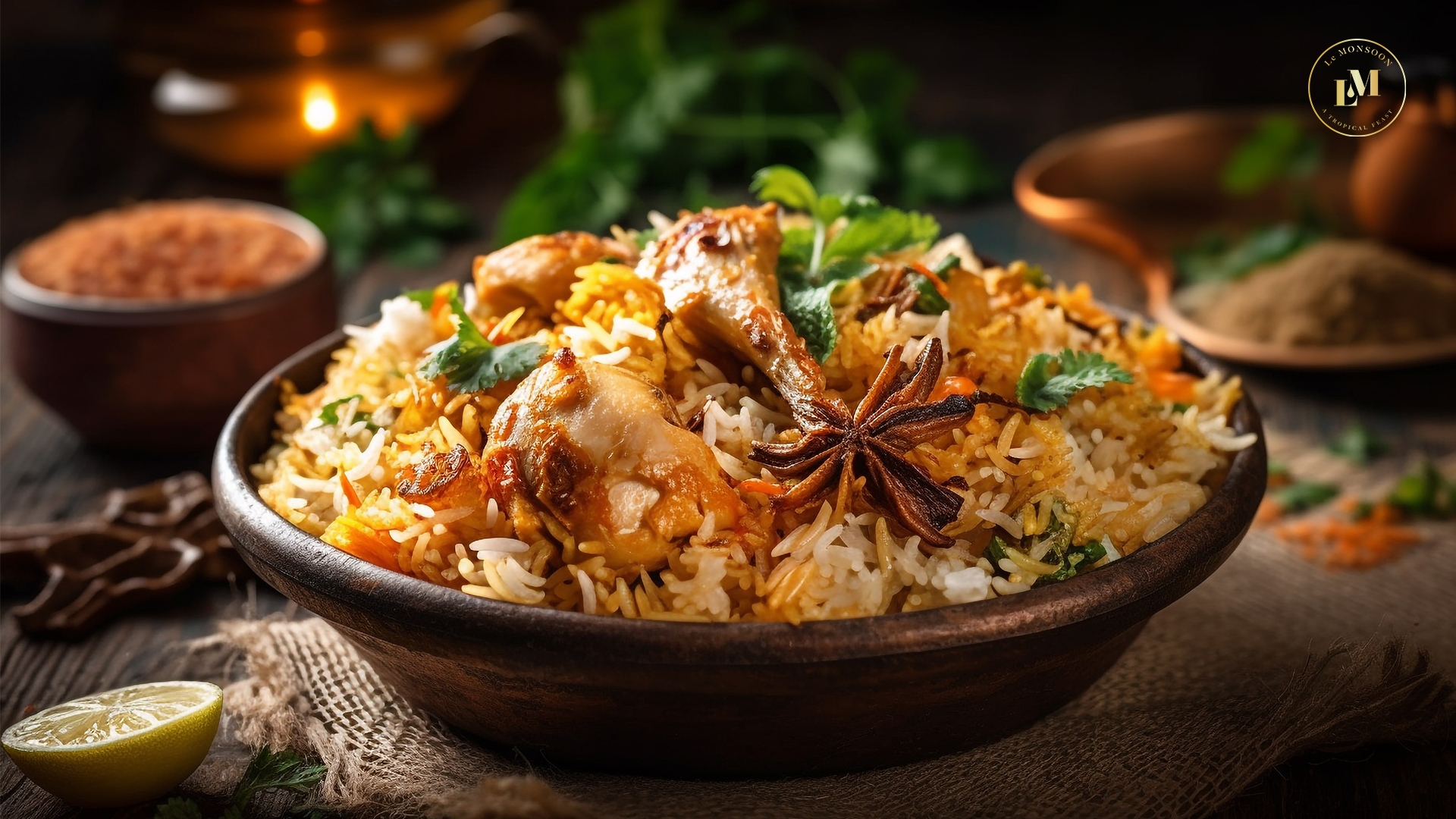
Ask any biryani purist what makes theirs different, and they'll start with the rice. Long grain basmati, soaked just long enough to open up but not so long that it loses its backbone. They'll talk about the whole spices: cardamom, cloves, a curl of cinnamon, a bay leaf that whispers more than it shouts. Star anise if the chef is feeling bold. Mace if the chef is feeling generous. And in a South Indian kitchen, maybe a few fresh curry leaves that crackle and release a scent so distinct that it makes you close your eyes before you even add anything else. Each spice is added not because the recipe says so, but because the heart knows when.
Then comes the onion. Not the onion you toss in a pan for five minutes. The onion you stand over, stirring, watching it go from sharp and white to soft and golden to that perfect shade of deep amber that smells like caramel kissed with heat. In our kitchen, we add a slit green chilli or two, maybe a sprig of curry leaves, because that is how Amma taught us. 'Barista onions', some call them. Worth every minute you spend watching them. This is not a step you can take in a hurry. And the biryani always knows if you tried. You can also feel it in the quiet of the restaurant just before the lid comes off. That hush. That's knowing.
Fresh mint, torn and not chopped. A generous handful of coriander, stems and all. Yoghurt marinated meat that has had hours to absorb everything you have given it, sometimes with a whisper of coconut milk if the recipe leans towards Thalassery or Ambur. Ghee poured slowly, not measured but felt. Saffron soaked in warm milk turned into something that looks like liquid gold. Layer by layer, with patience and intention, the pot becomes a story. And every single layer matters. We know this because we have seen it. We have stood shoulder to shoulder with the women and men who came before us, their hands guiding ours, their silence louder than any recipe book. The smell of the restaurant at dawn, before any customer arrives, is the smell of trust. The smell of doing things the long way because the long way is the only way that tastes like home.
What Dum Really Means
The word ‘dum’ comes from the Persian word ‘dam’, which means breath. And that’s exactly what this technique does. The pot is sealed tight, sometimes with dough pressed along the rim. The heat is kept low and steady. And inside, the biryani breathes on its own terms: steam circling, flavours marrying, the rice slowly absorbing the soul of everything beneath it.
You cannot rush dum. You cannot peek. You have to trust the process the way you trust a good chef, not because they've explained it to you, but because they’ve done it a thousand times before, and every single time, it was right. There’s something quietly profound about that. About choosing patience in a world that rewards speed. That patience is the secret ingredient no one ever writes on the label.
Every Region Tells a Different Story
India didn’t give the world one biryani. It gave the world hundreds. The Hyderabadi version arrives bold and unapologetic, the spice hitting you before the first bite even lands. Lucknowi biryani is softer, almost shy, and fragrant with rose and kewra in a way that feels like poetry read aloud. Kolkata’s version sneaks in a potato that is golden fried, tucked inside like a little surprise gift. And the South Indian favourite Malabar biryani of Kerala, cooked with short-grain kaima rice and finished with fried cashews and sweet raisins, carries the entire coast of home in every single grain.
Each version is a love letter from its place of origin. A living record of what the land grew, what the spice trade brought through, what the families quietly kept and passed on. You don’t just eat biryani. You read it. And once you understand that, you can never look at a plate of rice the same way again.
And here is the thing about biryani that surprises people who are trying it for the first time. You don't need to have grown up with it to feel something. The warmth is not exclusive. It doesn't ask where you're from before it reaches you. It just does.
The Table That Made It Real
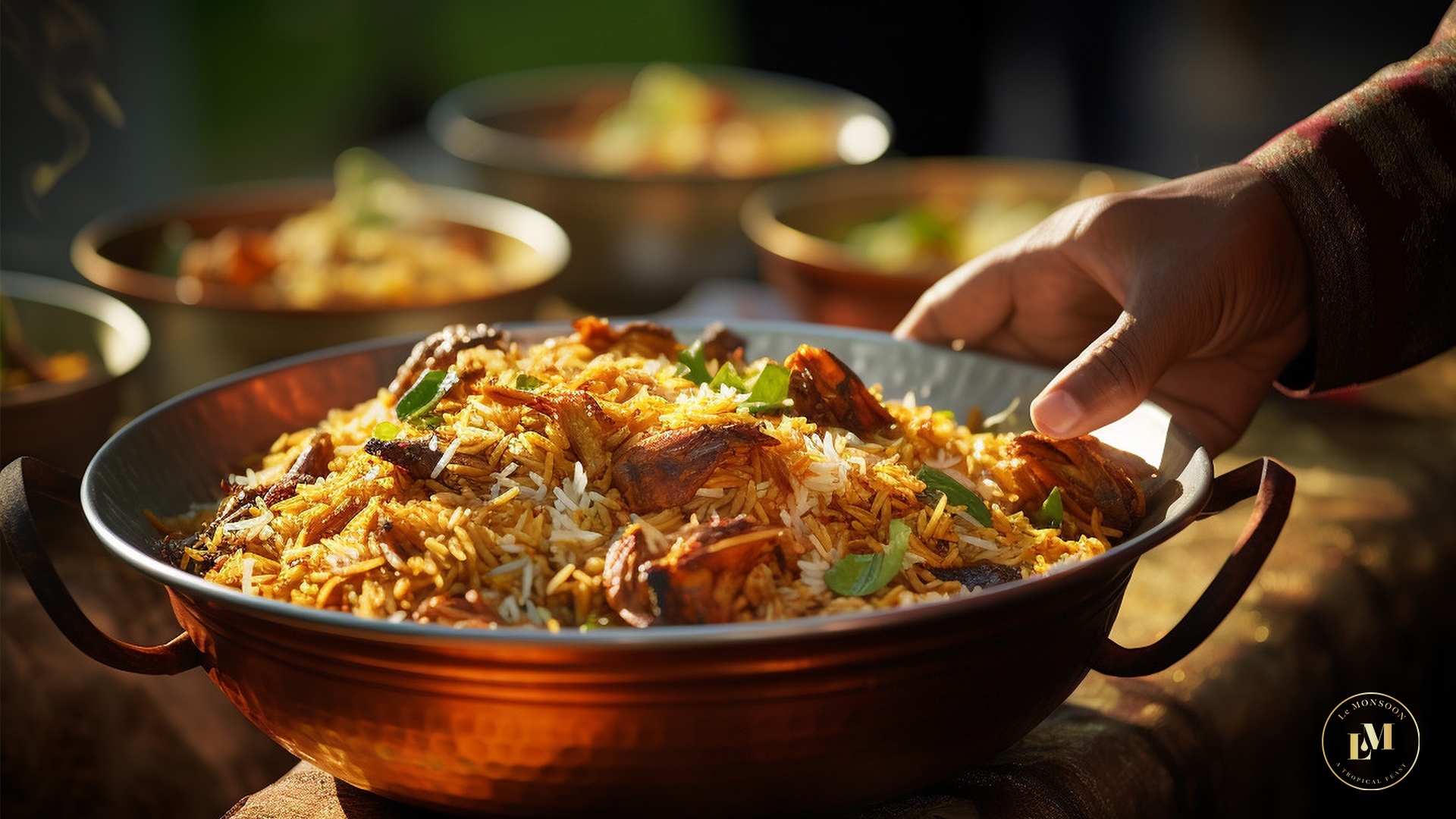
Here is what no biryani guide will tell you. The rice doesn't taste the same alone. The biryani you remember, the one that made you close your eyes on the first bite, had people around it. Someone was laughing too loudly at the other end of the table. The raita was being argued over. A child was sneaking a piece of chicken off a plate that wasn't theirs. An aunt was saying, "Eat more, you're too lean," to someone who had already eaten twice. Fingers reached across, napkins were forgotten, and somewhere in the middle of all that chaos, you took a bite and forgot where you ended, and the meal began.
The biryani was the centrepiece, but the warmth came from everything surrounding it. The noise. The squeezing together on benches that were never quite long enough. The clink of steel bowls passing from hand to hand. The moment someone scraped the bottom of the pot and tried to pretend they were just "cleaning it out". The second helpings no one admitted they were going for.
That is the thing about food made with real intention. It doesn't just feed the body. It holds space for the people who gather around it. It forgives the spilled gravy. It stays warm while the stories stretch longer than anyone planned. And biryani, more than almost any other dish, demands to be shared. You don't cook a biryani for one. You cook it for a moment. For a table. For the kind of memory that doesn't live in a recipe book but in the way people lean in when the lid finally comes off.
Keeping the Tradition Alive in Canberra
Living far from home changes how you experience food. The distance makes you sharper about what matters. You stop eating out of habit and start eating out of longing. And when you find a biryani that gets it right, the aroma, the careful layering, the tenderness of the meat, that first slow plume of steam when the pot is finally opened, something loosens in your chest that you didn't even realise was wound tight.
At Le Monsoon, we don't think of biryani as a menu item. We think of it as a responsibility. To the people who taught us. To the south indian traditions that shaped us. And to every person sitting at one of our tables who just wants, even for one meal, to feel like they're somewhere that understands them. Somewhere that feels like home.
Our biryani is cooked slowly with authentic South Indian flavours. Layered with care. The rice is separated grain by grain, the meat is fall-apart tender, and the bottom layer carries that perfect scorch that only comes from patience and a well-seasoned pot. Whether this is your first time sitting with a biryani or your ten thousandth, the experience is the same. Something hits before the plate even touches the table. Something settles. And for a moment, wherever you came from, you feel exactly where you should be.
So what makes a perfect biryani?
The rice helps. The spices matter. The dum is everything. But in the end, it’s the same answer it’s always been, it’s the love that goes in before the lid comes down. Where the memory is being honoured. The people are being fed. The tradition is being carried forward, one pot at a time.
By now, we're guessing this blog has done one of two things. Made you hungry. Or made you remember something you hadn't thought about in a while. Either way, there's only one cure. Come get your biryani at Le Monsoon, a South Indian restaurant in Canberra that actually understands what this dish means. We'll keep the pot warm for you. And yes, we know you're already drooling.
