.svg)


18-09-2026
Team Le Monsoon
Best Kerala Biryani in Canberra: What Makes It Different from Other Indian Biryanis
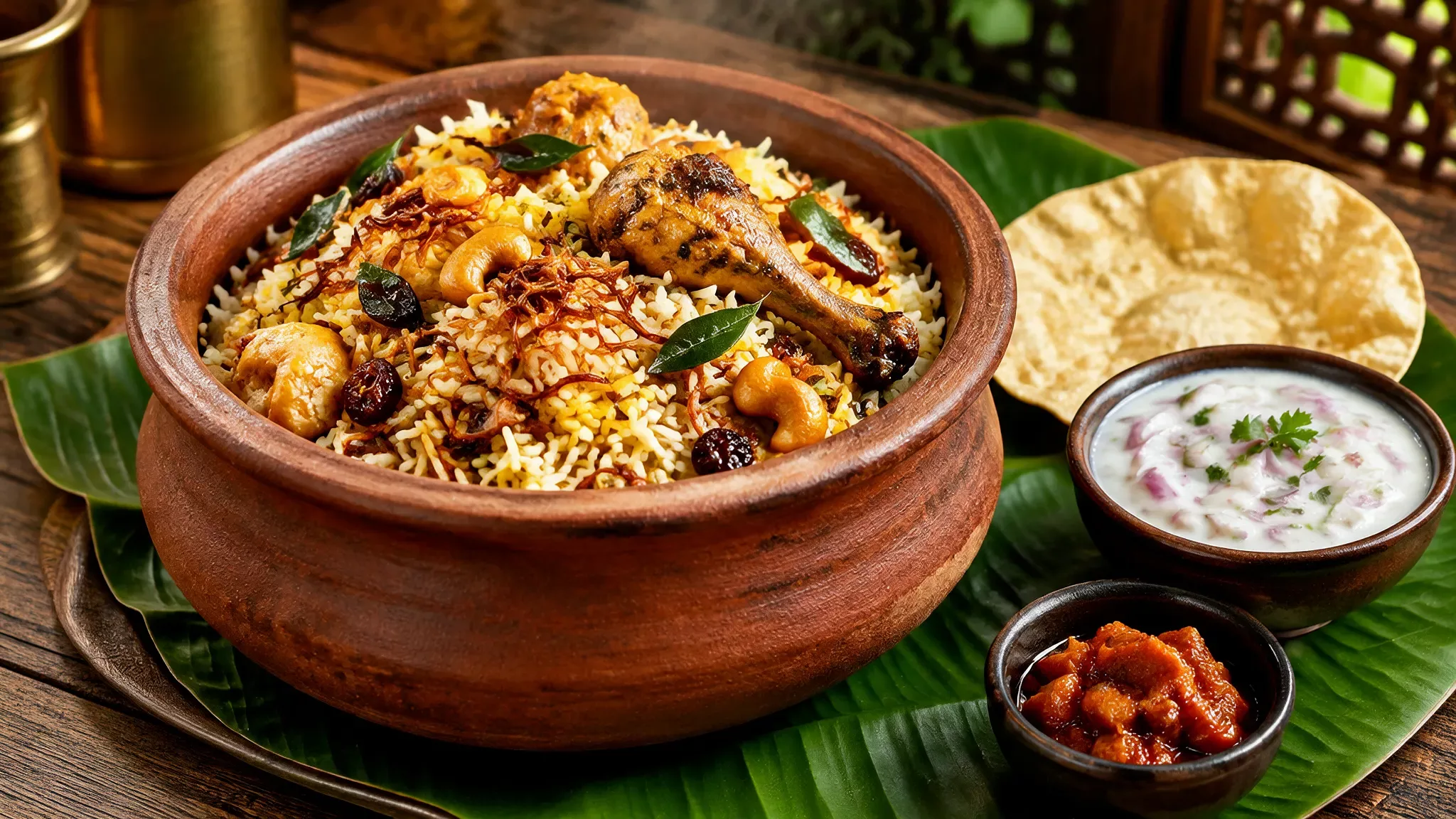
If you've only ever tried the fiery Hyderabadi plate or a fragrant North Indian bowl, a plate of authentic Kerala biryani will surprise you. It's milder, more aromatic, and built on ingredients most Indian restaurants never touch. At Le Monsoon, Canberra's home of authentic Kerala cuisine, we serve biryani the way it's made along the Malabar coast. Once you taste the difference, ordinary biryani rarely satisfies again.
This guide explains exactly what sets Kerala biryani apart, why it deserves a spot on your must-try list, and where to find the best version in Canberra.
What Is Kerala Biryani?
Kerala biryani, most famously the Malabar biriyani from the port town of Thalassery, comes from the coconut-rich, spice-trading south-west coast of India. Centuries of Arab trade along the Malabar coast shaped its character, giving it a gentler, more perfumed personality than the biryanis of Hyderabad, Lucknow or Kolkata.
Where many biryanis chase heat, Kerala biryani chases aroma. It's layered, delicately spiced and finished with fried onions, cashews and raisins, creating a dish that feels festive without overwhelming your palate.
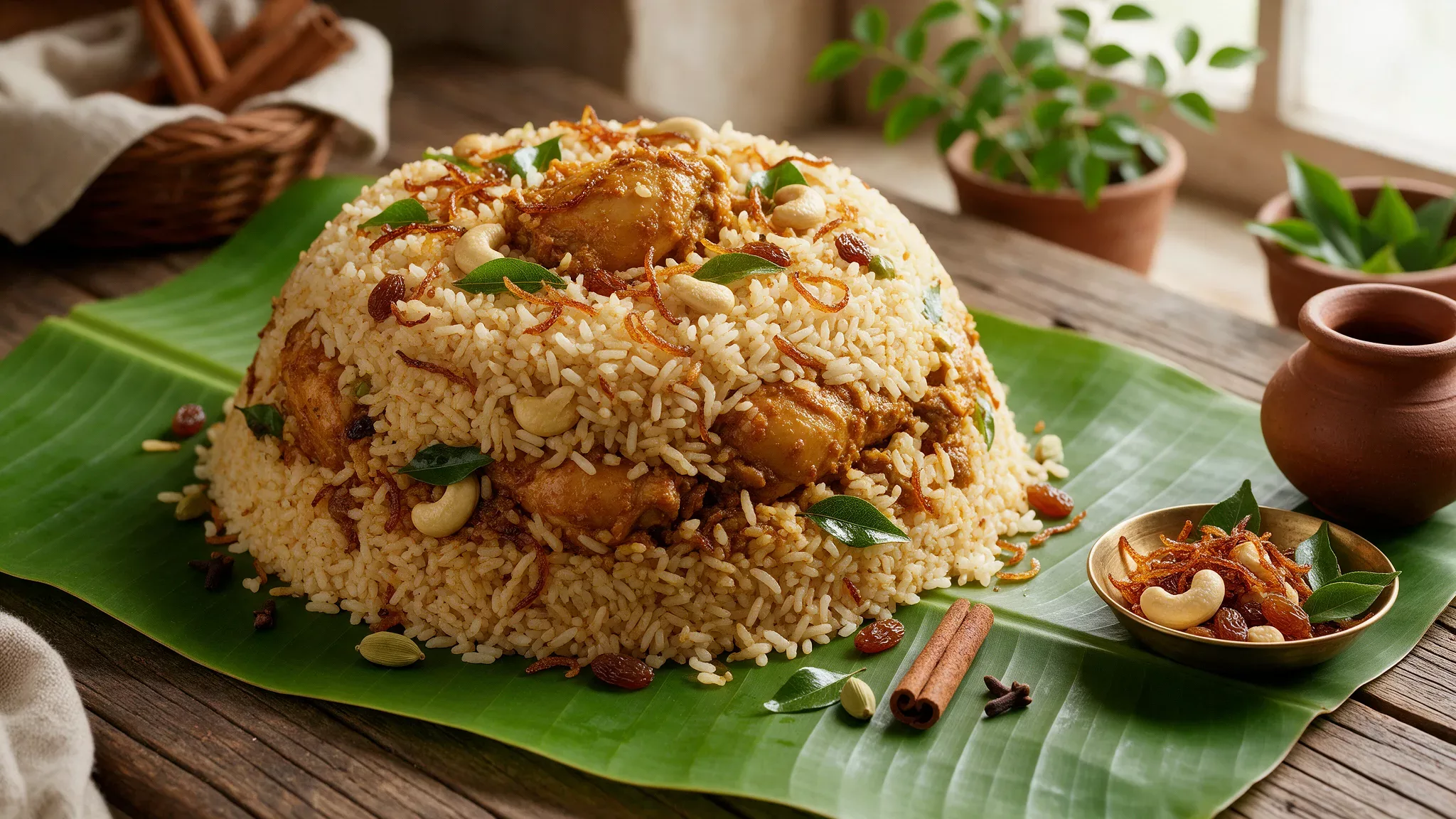
The name you'll hear most often is Thalassery biryani, after the coastal town, also spelled Tellicherry, where the dish was perfected. Thalassery sat at the heart of Kerala's spice trade for centuries, and that history is baked right into the food. Traders from the Arab world brought new techniques and ingredients, which local cooks folded into their own coconut-and-curry-leaf traditions.
The result is a biryani that tastes unlike anything from the north: lighter, more perfumed, and unmistakably Kerala. Today, it's the centrepiece of weddings, festivals and family gatherings across the region, and a genuine comfort food for anyone who grew up on it.
What Makes Kerala Biryani Different from Other Indian Biryanis?
Several things set it apart, and each one is worth understanding before you order.
1. It Uses Kaima Rice, Not Basmati
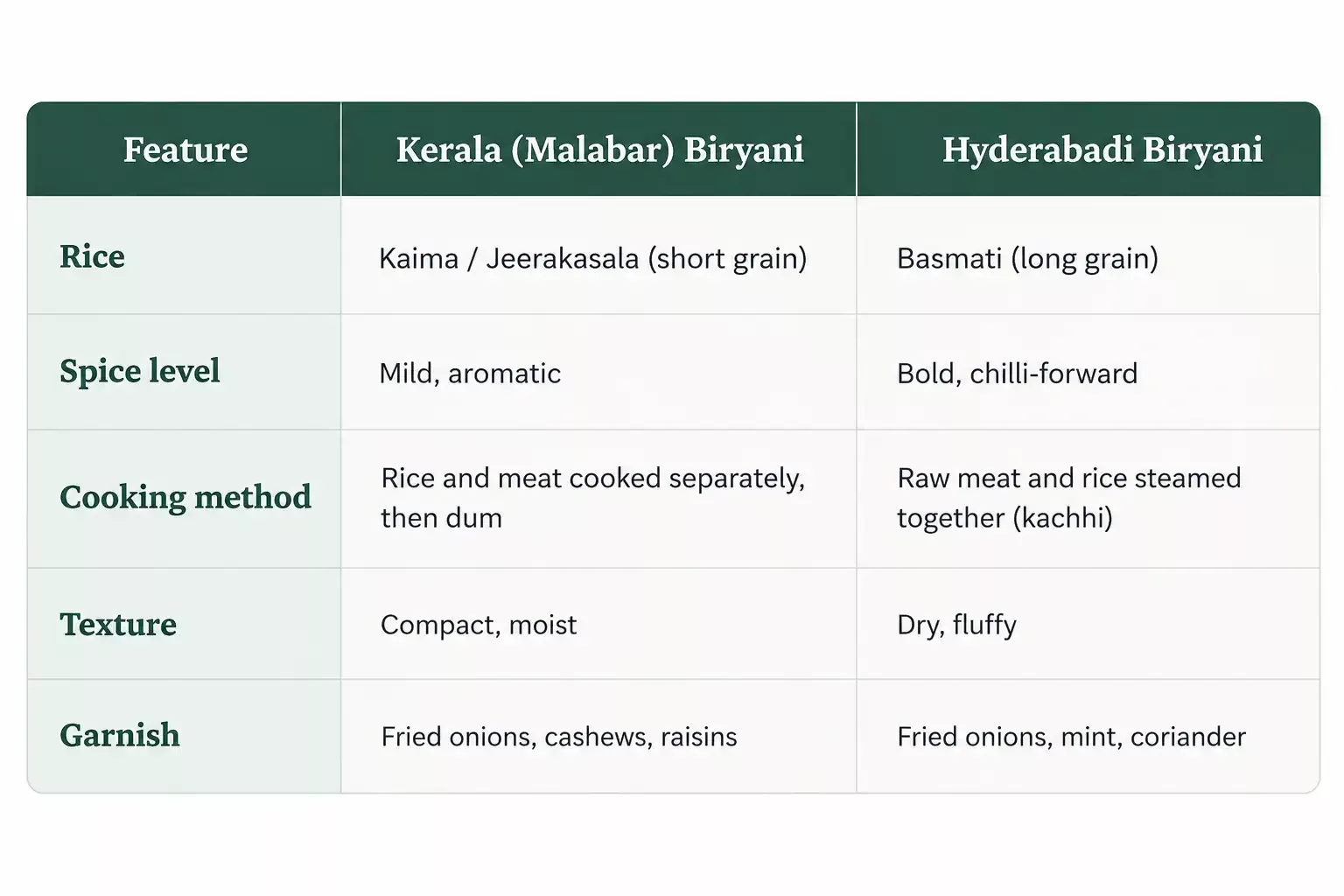
This is the biggest and most important difference. Instead of long-grain basmati, Kerala biryani uses Kaima rice, also called Jeerakasala, a short, slender, aromatic grain traditionally associated with Kerala.
These grains absorb spice beautifully without turning sticky, producing a biryani that's compact and moist rather than dry and fluffy. Swap in basmati and you simply don't get the same result; the dense, flavour-soaked texture is what defines the dish.
Kaima rice also carries a natural, almost cumin-like fragrance of its own, which layers on top of the spices rather than competing with them. Because the grain is shorter and rounder, it cooks faster and holds together, giving the finished dish its signature moist, slightly dense texture.
North Indian biryanis often prize separate, dry, fluffy grains; Kerala biryani deliberately goes the other way, and that's not a flaw. It's part of what makes the dish distinctive.
2. Aroma Over Heat
Kerala biryani is mild by design. The warmth comes from cardamom, cloves, cinnamon, fennel and Malabar black pepper rather than relying heavily on chilli. A touch of natural sweetness from caramelised onions and raisins rounds it out.
Compared with the bold, chilli-forward Hyderabadi style, the Kerala version lets the fragrance of freshly ground spices shine.
3. Meat and Rice Cooked Separately, Then Layered
In the classic Malabar method, the spiced masala and the rice are cooked separately, then layered together and finished with dum, or slow steaming under a sealed lid.
At serving, the layers are gently mixed so every spoonful carries both rice and masala. This differs from the Hyderabadi kachhi style, where raw marinated meat and part-cooked rice steam together from scratch.
4. A Distinctly Coastal Character
Curry leaves, the occasional use of coconut oil, and garnishes of fried cashews and raisins give Kerala biryani a coastal signature that neither North Indian nor Deccan biryanis replicate. It's a taste of Kerala's tropical kitchen in every bite.
Seafood also plays a starring role here in a way it rarely does elsewhere. Because Kerala hugs the Arabian Sea, fish and prawn biryanis are regional specialities in their own right.
That coastal influence is why a proper Kerala menu can offer fish and prawn versions alongside the usual chicken and mutton, giving diners a wider choice of biryani styles.
Kerala Biryani vs Hyderabadi Biryani at a Glance
A Kerala biryani is a complete meal on its own, but the right sides lift it further. A cooling raita balances the warm spices, while pappad adds crunch and a tangy pickle cuts through the richness.
Traditionally, Malabar biryani is even served with a wedge of lime and a few dates. This sweet-and-sour contrast may sound unusual, but it works beautifully.
If you're ordering at Le Monsoon, adding raita, pappad and pickle turns a single dish into a proper Kerala feast.
Why Kerala Biryani Is Worth Trying in Canberra
Canberra has plenty of biryani on offer, including Sri Lankan, Tamil Nadu, North Indian and other regional styles. However, authentic Kerala-style biryani made using traditional Malabar techniques offers a different flavour experience.
Many biryani styles use basmati and a heavier spice profile. Kerala biryani stands apart with its aromatic Kaima rice, gentler spice blend and distinctive combination of fried onions, cashews and raisins.
If you love food that's fragrant, balanced and comforting rather than intensely hot, Kerala biryani is well worth trying. It also pairs beautifully with classic sides like raita, pappad and pickle.
Where to Find the Best Kerala Biryani in Canberra
At Le Monsoon in Phillip, our chefs Robi and Antony bring authentic Kerala cooking to the capital. Our biryani range is made in the traditional Malabar style and includes:
- Chicken Biriyani
- Mutton Biriyani
- Fish Biriyani – a true coastal Kerala speciality
- Prawn Biriyani
- Egg Biriyani
- Veg Biriyani
Each is prepared with care, layered and slow-cooked so the spices settle into every grain. You can explore the full range on our menu, and if you're feeding a crowd, we also offer generous 5-pack biryani options.
Because great biryani travels well, we make it easy to enjoy at home too. Our takeaway and online ordering options mean you can bring authentic Kerala flavours to your table any night of the week, with no cooking required.
Prefer to dine in? The full Le Monsoon experience, from dosa to Kerala beef fry, is best enjoyed at our restaurant.
Bringing Kerala Home
Kerala biryani is more than a meal; it's a taste of the Malabar coast, shaped by centuries of spice trade and coastal tradition. Its short-grain Kaima rice, gentle spicing and slow-layered cooking make it genuinely different from many other biryani styles you'll find in Canberra.
If you're curious about Kerala's wider food culture, our menu is full of authentic Kerala recipes brought to life, from crispy dosas to fragrant fish curries. But the biryani is where many first fall in love with the cuisine.
Ready to taste the difference? Order now or book a table and experience authentic Malabar flavours in the heart of Canberra.
